











Contributors

Related Articles
Stay Up To Date
Something has gone wrong, check that all fields have been filled in correctly. If you have adblock, disable it.
The form was sent successfully
What Matters
The Point
Korea looks more investible today than it did a few years ago because the opportunity set has widened and the country occupies a more consequential place in the world economy.
The Proof
A more constructive outlook for advanced memory, improving governance, and newfound demand and export capacity in shipbuilding, power equipment, nuclear, robotics, and defense are changing how we read the market.
The Result
We have broadened our Korean holdings and increased our weighting to the country. This is a reflection of the wider set of businesses that we believe can create long-term value for our clients.
At a recent investor conference in Seoul, the first signal of a changing Korea was not in a presentation. It was in the audience. The conference sessions and company meetings around them felt more international than on prior visits. We saw the foreign investors showing up not only for memory and the largest exporters, but also for industrial companies that once would have drawn a more limited crowd.
The widening interest became more meaningful as our research team drove beyond the capital. In shipyards, factories, transformer plants, and engineering corridors farther south, Korea looked less like a market anchored by a small group of familiar national champions and more like one with a deeper bench of investible businesses. Some companies we already knew looked stronger. Others looked materially more important than they had only a few years ago.
Often described as the Land of the Morning Calm, Korea now occupies a far more volatile place in the world economy, shaped by a buildout in artificial intelligence (AI) infrastructure, the realignment of global supply chains, the power grid replacement supercycle, rearmament, and geopolitical tensions. Governments and companies are looking for trusted alternatives to China in critical industries, and Korea offers a rare combination of scale, technical depth, and the credibility of a largely neutral manufacturing base in an increasingly multipolar world.
For us, the practical implication is straightforward. Korea now offers a wider set of businesses that we believe can create long-term value for our clients. Some of those opportunities sit in companies in which we had already held a strong conviction. Others are emerging in businesses whose end markets, competitive positions, or industrial importance have improved materially. The market is not simpler than it was. It is more worth the work.
A Decade in Plain Sight
Ten years ago, Korea was easier to summarize. It was a highly capable export economy with a handful of globally recognized champions, strong manufacturing discipline, and expanding cultural reach. It was also a market many investors approached with caution. Governance concerns were persistent. China mattered greatly. Outside a narrower circle of familiar companies, the opportunity set could feel thinner than the country’s industrial reputation suggested.
The change is not that Korea suddenly invented new capabilities. In many cases, the capabilities were already there. The world has begun to value them differently.
Korea’s alliances with the United States and the broader Western economic system has been critical to strengthening the position of Korea Inc. over the past decade as U.S.-China tensions have escalated. The search for highly capable alternatives to China has expanded the addressable market for several Korean industries.
The reappraisal is visible across sectors. In semiconductors, Korea remains central to global technology supply, especially as Western restrictions on China solidify Korea’ s lead and pricing power in high-end products such as high-bandwidth memory.
In batteries and autos, it plays a meaningful role in electrification. In shipbuilding, it retained complex capabilities while many others stepped back. In defense-related manufacturing, it now occupies a more valuable position because speed, cost, and execution matter more to buyers than they once did.
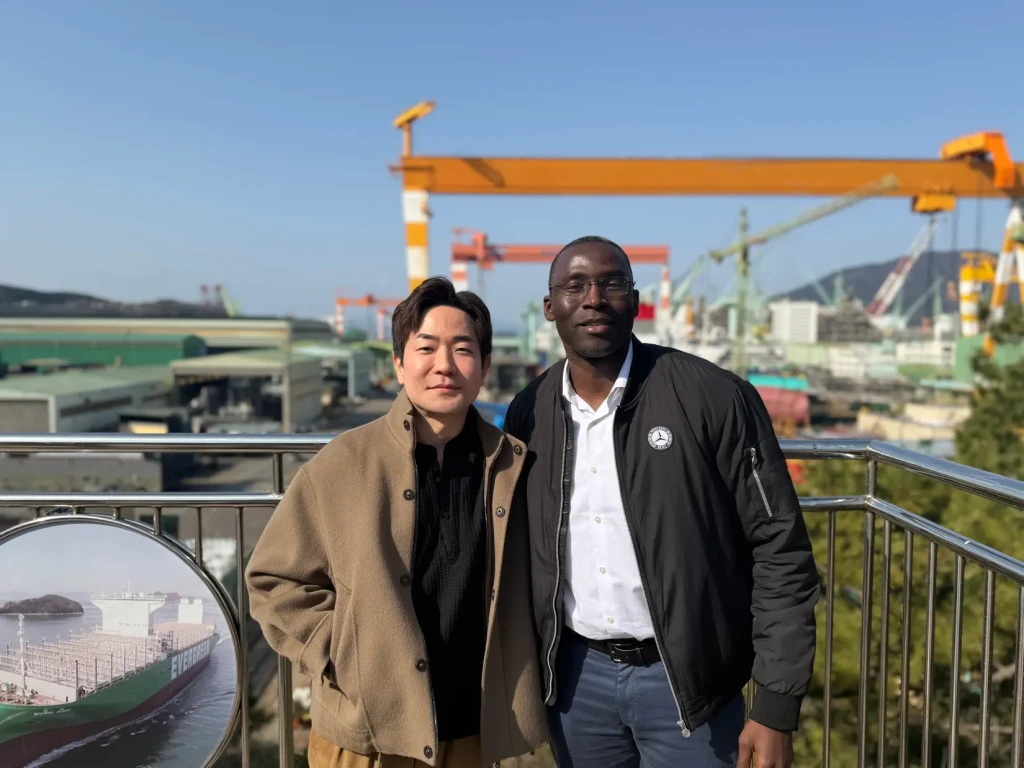
Another part of the story is harder to see from a distance. In several industries, the limiting factor is no longer demand alone. It is the small number of qualified suppliers with the right engineering depth, production capacity, and operating record. Transformer production requires time, specialized labor, and qualification. Complex shipbuilding capacity is not built overnight. Nuclear capability cannot be recreated by policy ambition alone. Even in beauty, speed to market and formulation capability are harder to reproduce than they appear at first glance.
When the supply side looks like that, industrial depth carries more value. Businesses once treated mainly as cyclical manufacturers can begin to look more like strategic enablers. That does not remove risk. It does improve pricing power, visibility, and the quality of the opportunity set.
Corporate conditions have changed as well. The governance story in Korea is not complete, and no serious investor should pretend otherwise. Still, the direction appears more constructive than it did in earlier periods. That matters less as a slogan than as a practical investment condition. A strategically important business can still be difficult to own if capital allocation and shareholder treatment remain weak. Even incremental improvement on that front can widen the range of companies worth serious work.
A decade ago, Korea looked like an economy the world bought from. Today, it looks more like one the world depends on. That is not a semantic distinction. It changes how businesses are valued, how opportunity sets deepen, and how seriously investors need to take the country.
AI Moves Beyond Chips
AI should not sit in this story as a semiconductor footnote. In Korea, it is becoming a demand multiplier across several industries.
The most direct effect is in memory, where AI workloads require more advanced, higher-value content. The second-order effects may prove just as important. Data centers are exposing constraints in grid infrastructure, lifting demand for transformers, switchgear, and other power equipment. They are also strengthening the case for reliable generation in markets short on firm power.
That matters because Korea is positioned well beyond the chip layer. Korean companies participate not only in memory, but also in the electrical backbone, industrial supply chains, and enabling components that sit behind automation. AI is increasing the value of the physical systems required to power, connect, and support compute.
Read this way, AI links several of the most interesting parts of the Korean market. Memory is the clearest direct beneficiary. Power equipment may be the clearest second-order beneficiary. Nuclear gains support as the power discussion shifts from clean generation in the abstract to reliable baseload supply for a more electricity-intensive economy. Robotics benefits more indirectly, as advances in AI improve capability while labor scarcity strengthens the case for deployment.
Not every business we are studying is an AI company. A growing number, however, are tied to the infrastructure an AI-heavy world requires. AI increasingly looks like a broader source of industrial demand rather than only a technology theme.
Where Conviction Is Already Established
The clearest change in our view of Korea begins with advanced memory. For years, the memory market’s cyclicality made the market harder to read. Memory, which at times had been considered a commodity, could be capital intensive, supply driven, and vulnerable to pricing swings. It did not always offer the business quality we preferred relative to other parts of the semiconductor stack.
SK hynix changes that discussion. The company sits directly in the part of semiconductor memory most exposed to rising AI demand, where high-bandwidth memory is becoming more important, more technically demanding, and more valuable to customers building AI infrastructure. The business remains cyclical, but the quality of demand has improved. SK hynix is participating in a segment where technical barriers, customer dependence, and mix economics look stronger than in prior periods. The potential for long-term agreements with volumes and pricing commitments from buyers could be game changing for the industry. It supports structurally higher margins, improved earnings and cash flow visibility, and more solid balance sheets mitigating the risks of financial distress in down-cycles. We believe this should support meaningful and sustainable valuation rerating for the industry.
Samsung Electronics remains essential to the broader Korea story, but in a different way. A stronger outlook for advanced memory naturally matters to Samsung because of its scale and centrality to the industry. At the same time, Samsung is a larger and more complex business, with more moving pieces across memory, logic, smartphones, consumer electronics, and other segments. Where SK hynix gives a more concentrated expression of improving AI-driven memory demand, Samsung reflects that backdrop through a much broader corporate structure.
The distinction matters. Korea’s largest businesses often sit at the intersection of several global industries at once. That scale can create strategic relevance, but it can also make the path from industry improvement to shareholder value less direct. In a market where selectivity remains central, that clarity matters.
Power equipment belongs close behind memory. If Samsung Electronics and SK hynix reflect rising demand for compute, Hyosung Heavy Industries reflects rising demand for the physical systems needed to power it. Its heavy industries division manufactures large power transformers, gas-insulated switchgear, and other grid equipment. The demand case rests on three separate drivers, aging grid replacement, new power load from AI and electrification, and renewable integration requiring long-haul transmission. Heavy industries account for about 70 percent of revenue and 94 percent of operating profit, and the Memphis facility gives the company a particularly strong position in the U.S. 765kV market, where domestic production remains limited.1
Hyosung matters because it shows that AI demand is not only a semiconductor story. It is also beginning to reshape the economics of the grid. In that sense, power equipment belongs much higher in the Korea story than many investors still assume.
The change is not that Korea suddenly invented new capabilities. In many cases, the capabilities were already there. The world has begun to value them differently.
A very different side of Korea appears in beauty and consumer markets. It shows how the country’s advantage can take a form that has nothing to do with heavy industry. The attraction lies in the ecosystem behind these categories. Korean companies compete through speed, product development capability, manufacturing depth, and responsiveness to changing consumer demand. In beauty, where novelty, formulation quality, and speed to market shape outcomes, that is a meaningful advantage.
Our meetings in Seoul with beauty companies, suppliers, and local investors left us more confident that Korean beauty’s momentum remains intact and increasingly international. The current cycle looks broader than the last one. Demand is spreading across the United States and Europe, and the category appears less dependent on one geography, one channel, or one breakout brand.
More broadly, Korean consumer exports continue to benefit from the country’s growing cultural influence and reputation for quality, innovation, and speed. What began with entertainment and beauty is extending into a wider set of consumer categories, where Korean products increasingly compete on brand strength and product performance rather than only price.
The broader lesson extends beyond beauty. Korea’s edge often lies not simply in the brand at the shelf, but in the ecosystem behind it. Speed, process know-how, formulation capability, and manufacturing depth allow products to move from concept to shelf in months rather than years. The same pattern appears repeatedly across the country’s industrial sectors.
The Industrial Opportunity Set, in Order
Not all industrial sectors we studied carry the same weight. Our ordering reflects the number and independence of demand drivers, the quality trajectory of the investible universe, the scope for positive revision, and the likely length of the demand runway. On that basis, after power equipment comes shipbuilding, nuclear, robotics, and defense.
Shipbuilding comes next because the demand case rests on three distinct pillars: liquified natural gas (LNG) buildout, regulatory fleet replacement, and naval rearmament. Korea remains central to complex vessel construction, where engineering capability and execution matter more than low-cost volume.
The quality of the value chain is improving as well. As fleets become more complex, economics are shifting toward engines, systems, and aftermarket services. This is not only a call on ship demand. It is a call on a better mix of businesses sitting behind that demand.
We are exploring opportunities in businesses that offer exposure not only to marine engines, but also to a more attractive aftermarket as the installed base shifts toward dual-fuel engines. Hanwha Engine fits that theme well through its exposure to LNG and dual-fuel propulsion systems, where tighter emissions standards and fuel transition are reshaping fleet economics. We are also interested in companies that have begun to combine shipyard exposure with a deliberate move toward defense and LNG exposure.
Nuclear comes next. The demand runway may be the longest of any sector under review, but the drivers tend to move together more than they do in shipbuilding or power equipment. Even so, the strategic case is strong. Energy security, rising electricity demand, and the need for clean baseload power are pushing countries to revisit nuclear generation.
A decade ago, Korea looked like an economy the world bought from. Today, it looks more like one the world depends on.
We are actively researching businesses that sit in a cleaner part of the value chain as suppliers of reactor pressure vessels, steam generators, turbines, and other critical components. Essentially, we are seeking exposure to the nuclear build cycle without taking on the full cost-overrun risk that sits with engineering, procurement, and construction contractors.
In nuclear, Doosan Enerbility remains the clearest way to express the theme. It sits in a strong position as a key component supplier across both Team Korea and Western-aligned programs, including small modular reactor opportunities. That gives it broader exposure to the global build cycle while insulating it from some of the cost overrun risk that can sit with engineering and construction contractors. It also has a second growth lever through gas turbines, which may benefit from rising power demand tied to AI infrastructure. Valuation is the main constraint at present, not the industrial story.
The larger nuclear point is that capability matters. Nuclear construction and component manufacturing require long experience, regulatory credibility, and deep technical expertise. Korea preserved more of those capabilities than many peers. In a market where execution risk is central, that history carries economic value.
Robotics follows. The long-term opportunity may be the largest of the sectors under review, but it remains earlier in its commercial life. Labor scarcity, improving AI capability, and falling component costs make the theme compelling. Even so, much of the humanoid segment is still in the research and development phase. The more attractive entry point today appears to be the component layer, where Korean suppliers can participate across a wider set of outcomes before platform winners are fully known.
Defense comes last in this sequence, not because the demand is weak, but because the logic is narrower. Rearmament is real, and Korea’s combination of cost, delivery speed, and customization has made it a more credible supplier across several geographies. Still, the demand case is more tightly tied to one geopolitical driver, and practical investibility can be more constrained. That keeps defense in the opportunity set, but lower in the current order of importance.
Beyond the Familiar Exports
Taken together, these businesses support a different reading of Korea. The country’s industrial strength is no longer simply an export story in the old sense. It is increasingly a story about positioning in markets that carry greater geopolitical and economic weight.
Korea has built capabilities in areas that now matter more because the world is short on trusted, scaled, and technically capable suppliers. That makes the country more consequential than older stereotypes would suggest. It also enlarges the set of companies that merit serious attention.
The cultural side of Korea is part of that broader relevance, too. K-pop may have been the opening act. It introduced Korea to the world as a cultural force, modern, ambitious, and impossible to ignore. It changed how many people thought about the country.
For investors, the next act is heavier. Korea’s growing relevance now extends into energy systems, infrastructure, defense supply chains, automation, and advanced manufacturing. That is a different kind of visibility, and one with longer investment runways behind it.
Our research trip reinforced that change in ways that felt immediate. The investor crowd was more international. The industrial conversations carried more weight. The country itself felt more integrated into the world economy than on prior visits.
More Than the Market Once Saw
We are not suggesting a simplistic country bet. Valuation still matters. Some sectors remain cyclical. Some of the most interesting opportunities may remain outside the investible set for mandate reasons. Selectivity remains essential.
A more constructive governance backdrop does not eliminate the need for discrimination, but it does make more of the market worth the work. The same is true of Korea’s stronger strategic standing. Greater relevance does not guarantee better returns. It does, however, enlarge the set of businesses that can plausibly create long-term value.
Our main takeaway from the trip is that Korea no longer reads as a market with only a narrow cluster of compelling ideas. It now offers a stronger set of businesses operating in more favorable industrial positions, under somewhat better market conditions, and with clearer paths to creating long-term value.
Korea now presents a stronger set of investible opportunities than it did a few years ago. A larger share of those opportunities sits in areas where global demand looks durable and the number of qualified suppliers remains limited. That is a combination we take seriously.
1. Hyosung Heavy Industries company filings and Sands Capital research as of May 20, 2026.
Disclosures:
The views expressed are the opinion of Sands Capital and are not intended as a forecast, a guarantee of future results, investment recommendations, or an offer to buy or sell any securities. The views expressed were current as of the date indicated and are subject to change.
This material may contain forward-looking statements, which are subject to uncertainty and contingencies outside of Sands Capital’s control. Readers should not place undue reliance upon these forward-looking statements.
All investments are subject to market risk, including the possible loss of principal. Recent tariff announcements may add to this risk, creating additional economic uncertainty and potentially affecting the value of certain investments. Tariffs can impact various sectors differently, leading to changes in market dynamics and investment performance.
The specific securities identified and described do not represent all of the securities purchased, sold, or recommended for advisory clients. There is no assurance that any securities discussed will remain in the portfolio or that securities sold have not been repurchased. You should not assume that any investment is or will be profitable.
As of May 15, 2026, Hyosung Heavy Industries, Samsung Electronics, and SK hynix were held across Sands Capital strategies. The companies represent some South Korean holdings and were selected to represent companies visited by the research team during their March 2026 trip.
Any holdings outside of the portfolio that were mentioned are for illustrative purposes only.
Sands Capital refers to the combination of Sands Capital Management, LLC, Sands Capital Alternatives, LLC and Sands Capital Horizons, LLC. All three firms are registered investment advisers with the United States Securities and Exchange Commission in accordance with the Investment Advisers Act of 1940. The three registered investment advisers share certain personnel, office space, and other resources.
This communication is for informational purposes only and does not constitute an offer, invitation, or recommendation to buy, sell, subscribe for, or issue any securities. The material is based on information that we consider correct, and any estimates, opinions, conclusions, or recommendations contained in this communication are reasonably held or made at the time of compilation. However, no warranty is made as to the accuracy or reliability of any estimates, opinions, conclusions, or recommendations. It should not be construed as investment, legal, or tax advice and may not be reproduced or distributed to any person.