












Our Culture

What you believe and what you value as an organization matters. Discover the DNA of our firm.

Our People

Get to know our teams and the stories of select staff members who share why they choose to work at Sands Capital.

News & Events

Read about some of the latest events, partnerships, and business highlights from Sands Capital.

Careers

At Sands Capital, we strive to hire exceptional talent who will live our values and support our efforts to deliver on our mission.
In these webcast reviews, the featured portfolio managers discuss perspectives on the market environment, the portfolios’ top contributors and detractors, and recent purchases and sales.

In this podcast episode, Michael Grainger, Global Venture Managing Partner, discusses how AI and cybersecurity are reshaping industries, national security, and investment opportunities within the Sands Capital Global Venture strategy. 

Our edge is our culture that helps us do the obvious but hard things. We own many high-quality businesses and hold them with discipline over long periods of time.

FPT has harnessed education to drive Vietnam’s digital transformation and human-capital development.

Philosophy & Approach

Our philosophy is rooted in the belief that, over time, stock prices will reflect the earnings power and growth of the underlying businesses.

Our latest annual report offers a comprehensive view of how we add value through active stewardship.

Public Equity

Our newest strategy takes an unconstrained approach to seeking the best growth businesses outside of the U.S.

Venture and Growth Equity

Sands Capital invests in innovative businesses across all stages of the growth spectrum

Protecting Trust in the Evolving Digital Economy

Contributors

on
May 19, 2026

Rahul Powar, Mark McGovern, and Red Sift’s journey from startup beginnings to protecting trust at scale.

When Mark McGovern first met Rahul Powar (pictured below) and his co-founder, the setting was unmistakably early stage. The chairs were plastic. The office was modest. The surroundings were scrappy. Rahul’s thinking was not. He saw early that as businesses grew more dependent on digital communication, trust itself was becoming a point of vulnerability. Red Sift was built to help organizations protect that trust across email, domains, and online impersonation in a way that was practical and usable.
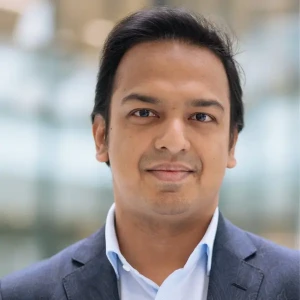
Mark, a partner on our Global Venture strategy, had spent years in cybersecurity and knew quickly that he was hearing something unusual. Red Sift was not simply identifying a threat. Rahul and his team had a clear view of where the market was heading and a practical way to help customers respond. In a category crowded with complexity, his clarity stood out.

It still does.

Every day, businesses rely on digital communication to operate. Email, websites, and digital identities connect companies with employees, customers, and partners around the world. But as those channels have become more important, they have also become more exposed. Phishing, impersonation, and identity-based attacks are now among the most common and damaging forms of cyber risk.

Red Sift was built to address that problem. The company helps organizations strengthen trust across the digital channels they depend on, with solutions focused on email security, brand protection, and internet-facing risk. As cyber threats grow more sophisticated and more frequent, that work has become more important. 

When Trust Became the Vulnerability

For Rahul, the roots of that mission go back to a long-standing interest in pattern recognition. Earlier in his career, he worked as a technical architect at Shazam, where the challenge was identifying a meaningful signal within massive amounts of noise. Over time, he came to see a similar problem emerging across the internet. The signals that could help organizations detect risk were there, but they were fragmented, weak, and difficult to interpret at scale.

Such insight shaped Red Sift from the beginning. As digital business expanded, so did the attack surface around it. Trust was becoming more important to how companies operate, but also easier to exploit. Cybersecurity was no longer just about defending what sat inside the perimeter. It was increasingly about protecting how a company appeared across the open internet and how others experienced its brand, domains, and communications.

The Problem Hidden in Plain Sight

Email remains one of the clearest examples. It is essential to how businesses operate, but it is also one of the internet’s oldest protocols. It was not designed for the demands of the modern digital economy. Security layers have been added over time, but the system remains open, decentralized, and difficult to modernize without breaking what already exists. That helps explain why phishing remains so persistent. Email is still one of the easiest channels to impersonate, and impersonation is ultimately an attack on trust.

The challenge then is not only technical. It is also operational. Many organizations still have not implemented modern best practices consistently. Others continue to think about cybersecurity mainly through the lens of their own network perimeter, even as attackers increasingly target customers, suppliers, and other external stakeholders by impersonating trusted brands online. In practice, an attack no longer has to move through a company’s network to cause damage. It can bypass the perimeter entirely by exploiting trust somewhere else.

Red Sift’s approach reflects this broader reality.

The company does not just help secure what sits inside an organization’s walls. It also helps companies protect how they appear and are perceived across the digital channels that matter most.

Making Cybersecurity More Usable

The combination of technical depth and usability is part of what drew Sands Capital to Red Sift. Mark (pictured below) has spent decades in cybersecurity as an operator, founder, and investor. He began his career at the CIA building covert and clandestine communications systems. He later worked with startups focused on application security, led security investing for In-Q-Tel, a venture capital firm that partners with U.S. national security agencies, and founded his own cybersecurity company before joining Sands Capital. Mark’s experience gave him a broad view of the industry and a clear sense of what separates promising ideas from durable businesses.

In Red Sift, he saw both a strong team and a product philosophy that felt rare in cybersecurity. Rahul and his co-founder had worked together before and had experience building products around difficult technical problems. Just as important, they understood how to make those products usable. In cybersecurity, that matters. Many tools are sophisticated under the surface but difficult for customers to deploy, manage, or scale. Red Sift stood out because it was built to reduce complexity rather than add to it.

A product that is powerful but usable can serve customers across a much broader market. Red Sift can support large enterprises with complex environments while also delivering value to organizations that may not have deep in-house security expertise. In a market where many products are built for specialists, usability can become a meaningful advantage.

Competing in an Adversarial Market

Sands Capital also saw something broader in the company’s framing of the problem. Cybersecurity is unlike most other areas of technology because the market is shaped not only by innovation, but by intelligent adversaries. Attackers adapt. They look for the easiest path in. They shift tactics as defenses improve. That makes the category dynamic, but it also raises the bar for the companies trying to serve it. It is not enough to build a clever product. A company has to keep evolving with the threat landscape while continuing to solve a customer problem in a way the customer can actually absorb.

That’s one of the reasons resilience has become an important lens for Sands Capital. In Mark’s view, cybersecurity is one of the clearest expressions of resilience in the digital economy. Once a company proves it can defend customers against meaningful threats, customer relationships can become durable. Many organizations do not want to replace a solution that works. For long-term investors, that creates the possibility of building a business with both staying power and relevance.

Beyond Email Security

Red Sift’s evolution reflects this potential the broader expansion of digital trust risks. What began as a company focused heavily on email security has expanded to address a broader set of digital trust challenges, including brand impersonation and internet-facing risk. Red Sift’s growth has followed the progression of cyberattacks themselves. Bad actors are no longer limited to going after employees behind the firewall. They are just as willing to target customers, partners, and supply chains by exploiting brand identity and trust in public-facing channels.

Artificial intelligence (AI) is likely to accelerate these types of attacks. For attackers, it lowers the cost of creating convincing phishing messages, fake websites, and other forms of deception. For defenders, it creates an opportunity to detect and respond to those threats faster and more effectively.

Rahul sees particular promise in two areas. The first is interpretation. AI has made it far easier for machines to understand the language, imagery, tone, and visual cues that make trust-based attacks persuasive to humans. The second is expertise. Cybersecurity is complicated, and many organizations do not have the resources to build specialist teams around every part of their digital environment. AI offers a way to encode and scale more of that expertise, helping customers mitigate risk more effectively without adding friction.

For Red Sift, the opportunity is not to apply AI as a slogan. It is to use it where it can remove real complexity from a difficult problem. This ambition is likely familiar to anyone who has followed the company from the beginning. Make the product powerful. Make it usable. Make something complicated feel a little closer to magic.

Built for the Long Term

What began in a sparse startup office has become a long-term partnership built on trust, candor, and a shared belief in durability. For Rahul, that matters because cybersecurity is not a category where a company can afford to think only in short cycles. Threats evolve. Customer expectations rise. Markets shift. Enduring businesses in this space need patient capital and long-term partners.

Rahul, who is not a client of Sands Capital’s, says he found that kind of partnership in Sands Capital. The relationship has gone beyond financing. Sands Capital has been a thought partner on strategic and operational questions, and the team has helped Red Sift make introductions that sometimes create opportunities for customers. Just as important, the relationship appears to have given Rahul the space to keep building with a long horizon in mind rather than reacting to every short-term turn in the market.

A long-term approach also shows up in the company’s customer relationships. Some of Red Sift’s earliest customers have stayed with the business for many years, a notable achievement in software and a sign that the company is solving problems that remain important over time.

Resilience Requires Trust

As digital business becomes more interconnected, trust is becoming a more important part of resilience. It is not enough for systems to stay online. Organizations also need confidence that their communications, identities, and brands are secure across the broader internet.

Red Sift is working to solve this problem. It is also why the company’s work has become more relevant over time. In a digital economy where trust is constantly tested, helping organizations protect it may prove to be an increasingly important part of staying resilient.

Disclosures:

The Venture Capital and Private Growth Equity investment strategies are managed by Sands Capital Alternatives, LLC and are only available through private placement to qualified investors.

This material was published on May 19, 2026. As of May 19, 2026, Red Sift was held in Global Venture Fund II. The founder agreed to participate and has approved the story prior to publishing. Compensation was not provided to participants; however, Rahul Powar can reuse the content with Sands Capital’s permission. Usage rights to the content features as of May 19, 2026 is subject to change.  

Mr. Powar has no relationships or affiliations with Sands Capital and does not invest in its public or private strategies.  Mr. Powar’s experience may not be representative of the experience of other customers and is no guarantee of future performance or success.

The case study is provided to illustrate Sands Capital’s ability to add value to its portfolio companies. It is provided for discussion purposes only and the information included should not be relied upon to make any investment decision. An investment in a private markets fund is only suitable for sophisticated investors for whom an investment does not constitute a complete investment program, who have experience with similar types of investments, and who understand, are willing to assume, and have financial resources necessary to withstand the significant risks involved in the investment, including the potential for a complete loss of capital. An investment strategy focused primarily on privately held companies presents certain challenges and involves incremental risks as opposed to investments in public companies, such as dealing with the lack of available information about these companies as well as their general lack of liquidity. Private equity funds often hold illiquid investments and their performance may be volatile. There also can be no assurance that companies will list their securities on a securities exchange; as such, the lack of an established, liquid secondary market for some investments may have an adverse effect on the market value of those investments and on an investor’s ability to dispose of them at a favorable time or price.

The specific securities identified and described do not represent all of the securities purchased, sold, or recommended for advisory clients. There is no assurance that any securities discussed will remain in the portfolio or that securities sold have not been repurchased. You should not assume that any investment is or will be profitable.

The views expressed are the opinion of Sands Capital and are not intended as a forecast, a guarantee of future results, investment recommendations or an offer to buy or sell any securities. The views expressed were current as of the date indicated and are subject to change. This material may contain forward-looking statements, which are subject to uncertainty and contingencies outside of Sands Capital’s control. Readers should not place undue reliance upon these forward-looking statements. There is no guarantee that Sands Capital will meet its stated goals. Past performance is not indicative of future results.

All investments are subject to market risk, including the possible loss of principal. Recent tariff announcements may add to this risk, creating additional economic uncertainty and potentially affecting the value of certain investments. Tariffs can impact various sectors differently, leading to changes in market dynamics and investment performance. The Global Venture strategy is concentrated in a limited number of emerging technology companies.  Some of the risks impacting the strategy include cybersecurity risk, cryptocurrency risk, risks associated with investing in India and China and special risks, such as products or services not proving commercially successful or quickly becoming obsolete.

Further Disclosures

Related Articles

Investment Strategy
From Umami to Automation: How Japan’s Reinvention Is Creating New Investment Frontiers
After many research trips to Japan, we moved to increase some of our exposure to businesses supported by key trends, such as digitalization and advanced computing, industrial innovation, unique consumer preferences, and an aging domestic and global population.
Investment Strategy
Space: The Emerging Frontier
A more active space economy is taking shape as cheaper, more reliable launch expands what can be built, deployed, and sustained profitably beyond Earth.
Investment Strategy
The Power Behind AI
Artificial intelligence is becoming an energy and infrastructure story. As data center demand surges, power is emerging as a critical constraint and a potential source of long-term opportunity across generation, transmission, and distribution.
Investment Strategy
Beyond the Multiple
At Sands Capital, valuation starts with the business, not the multiple. We assess expected return through long-term earnings power, competitive advantage, and portfolio context to pursue attractive opportunities.
Investment Strategy
From Mission to Mandate
Resilience has shifted from a national security concern to a global economic imperative. As AI transforms systems and cyber threats accelerate, institutions must embed intelligence and security at their core to remain effective.
on
Print

Important Notice​

Sands Capital does not communicate with clients, prospective clients, or the public via WhatsApp or other social messaging platforms. All official communications are sent only through authorized firm channels and are subject to strict policies, procedures and internal controls designed to protect client information and prevent fraud. If you receive a message claiming to be from Sands Capital through an unofficial channel, do not respond and contact your Sands Capital representative or report the incident to law enforcement.

Perspectives Newsletter
Our latest thinking on innovation investing, long-term capital, and culture.

Something has gone wrong, check that all fields have been filled in correctly. If you have adblock, disable it.

The form was sent successfully